123auto - Case Study
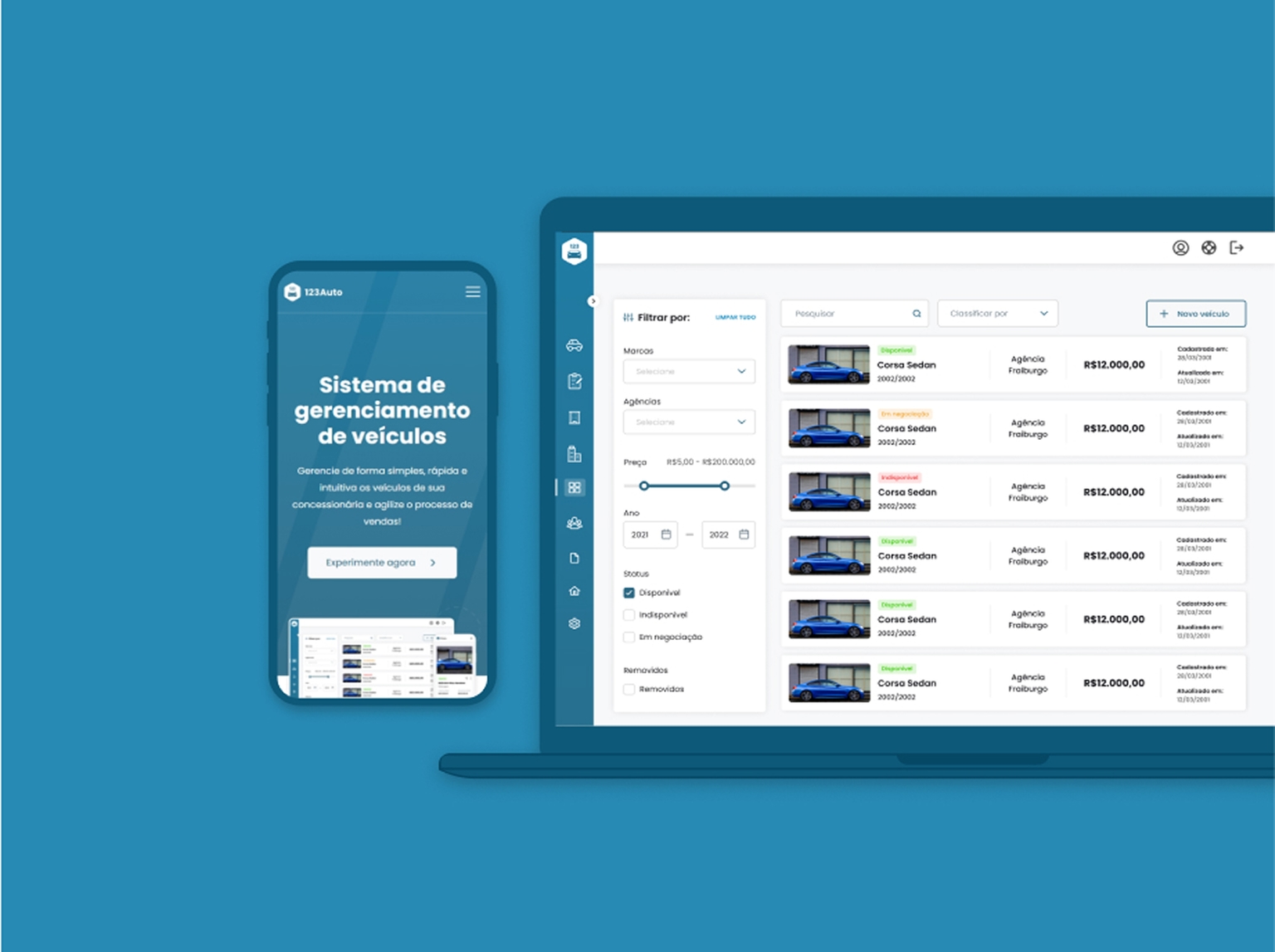
Redesigning the full dealership workflow — from vehicle registration to customer handoff.
Role
UX Engineer
Timeline
2024
Tools
Figma, Miro, HTML, SCSS, JavaScript, .NET
The Problem
How do you digitize and streamline every step of a vehicle dealership's operation?
Car dealerships run on complexity — inventory management, customer relationships, financing flows, external system integrations. Most of that complexity was being handled manually or through fragmented tools that didn't talk to each other.
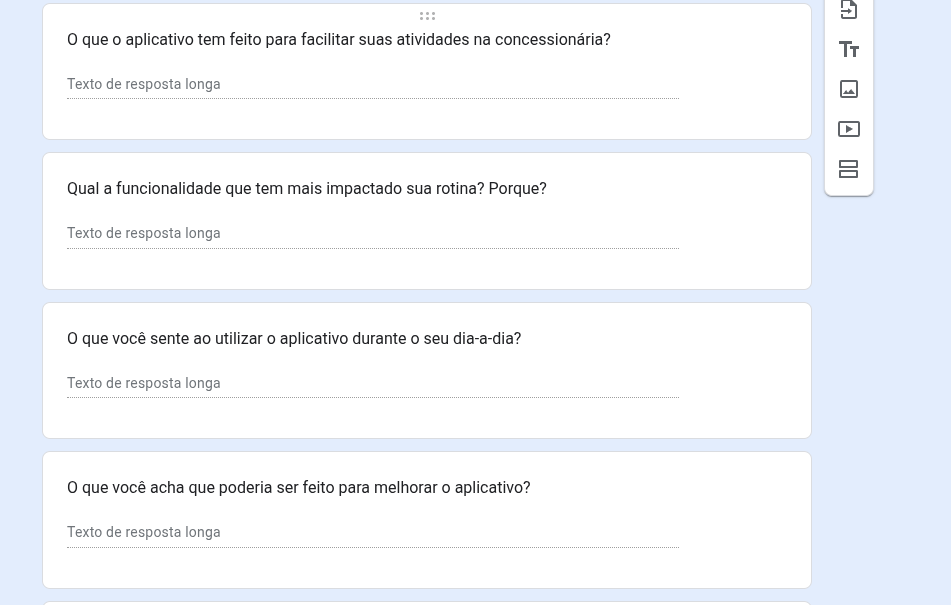
The starting point wasn't a blank slate. A solution already existed — which meant real users had real opinions. Before sketching a single screen, I built a feedback form to hear directly from people already living inside the system.
What the Research Revealed
Three themes surfaced consistently across every response:
- Registration was painful — the sign-up flow felt slow and unintuitive, creating friction right at the moment of first impression
- Vehicle listings lacked clarity — too much noise, not enough signal; users had to dig for the information they actually needed
- The system lived in isolation — no integrations with external platforms meant manual workarounds became the norm
These weren't feature requests. They were signals of a system that had grown without a clear user perspective. With the feedback mapped out, I sat down with the Product Owner to pressure-test each insight and define which problems were worth solving first.

That conversation became a mind map — a shared artifact that helped us align on priorities and understand the project's hierarchical layers before touching a single screen.
Mapping the Flow
With alignment in place, the next step was understanding the full scope of the system — not just individual screens, but how everything connected.
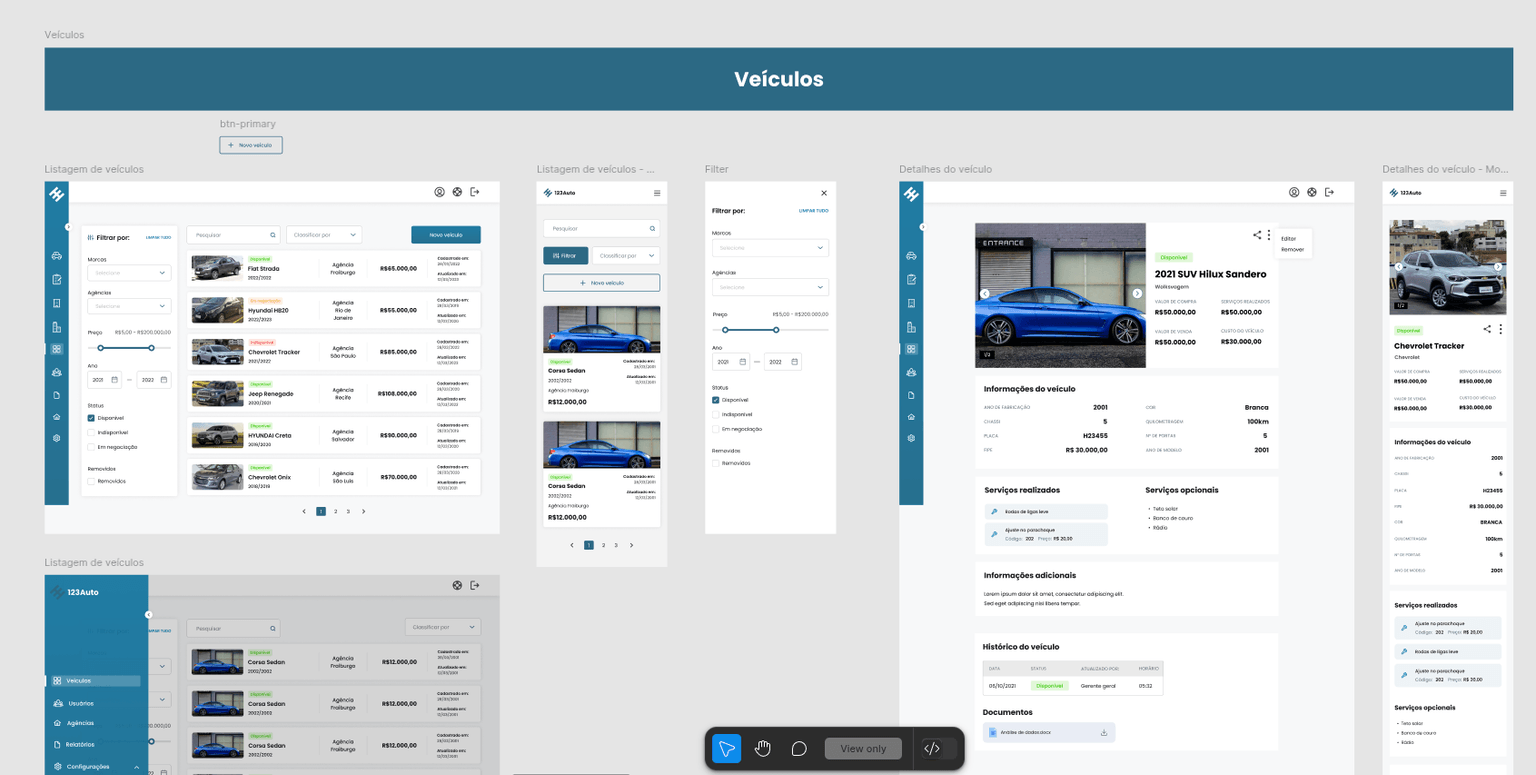
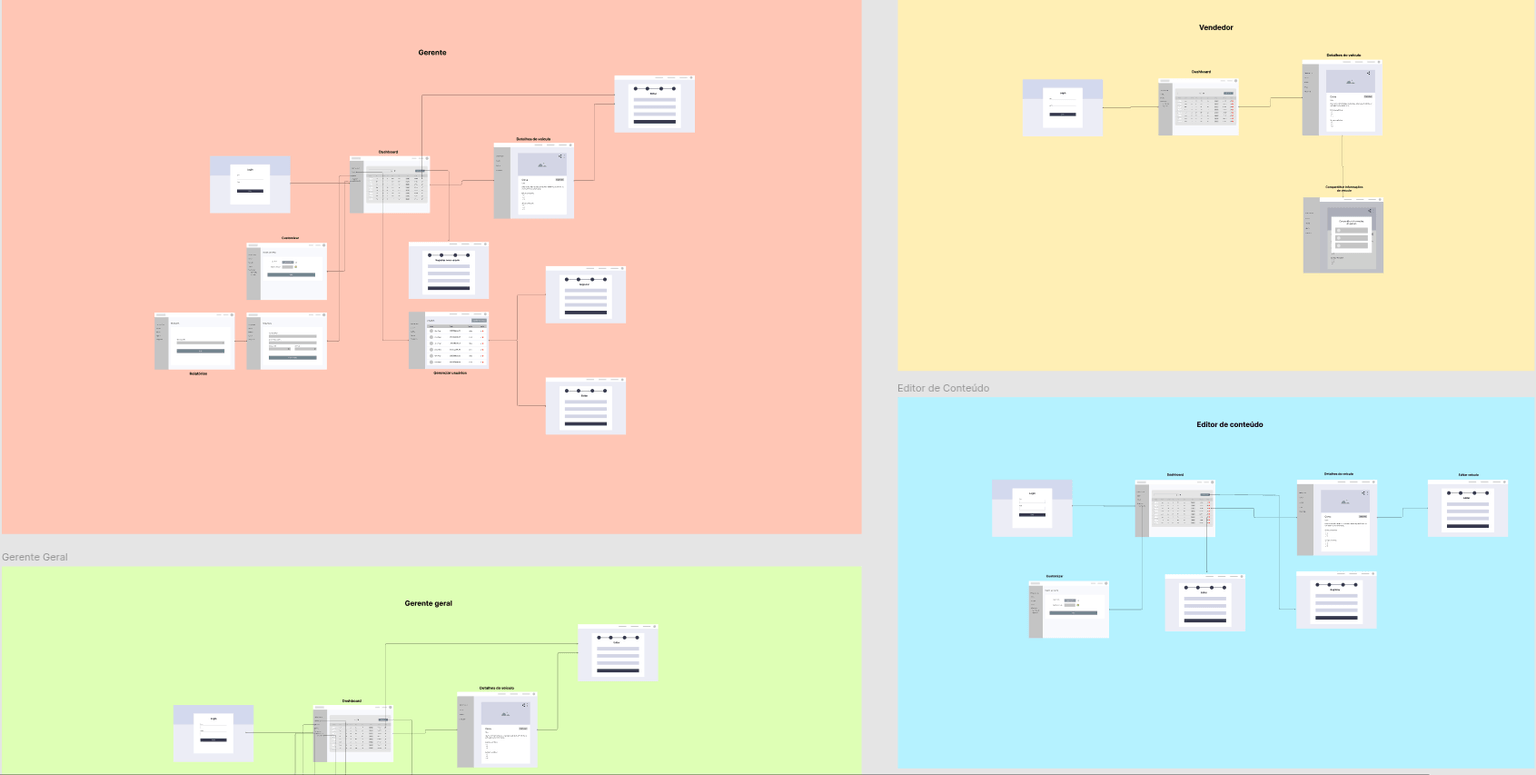
I designed a wireflow covering every screen in the product and how users would navigate between them. This became the single source of truth for the team during the design phase.

From there, I broke the experience into its hierarchical flows — separating the distinct user journeys within the system so each one could be designed with the right level of focus.
Final Design
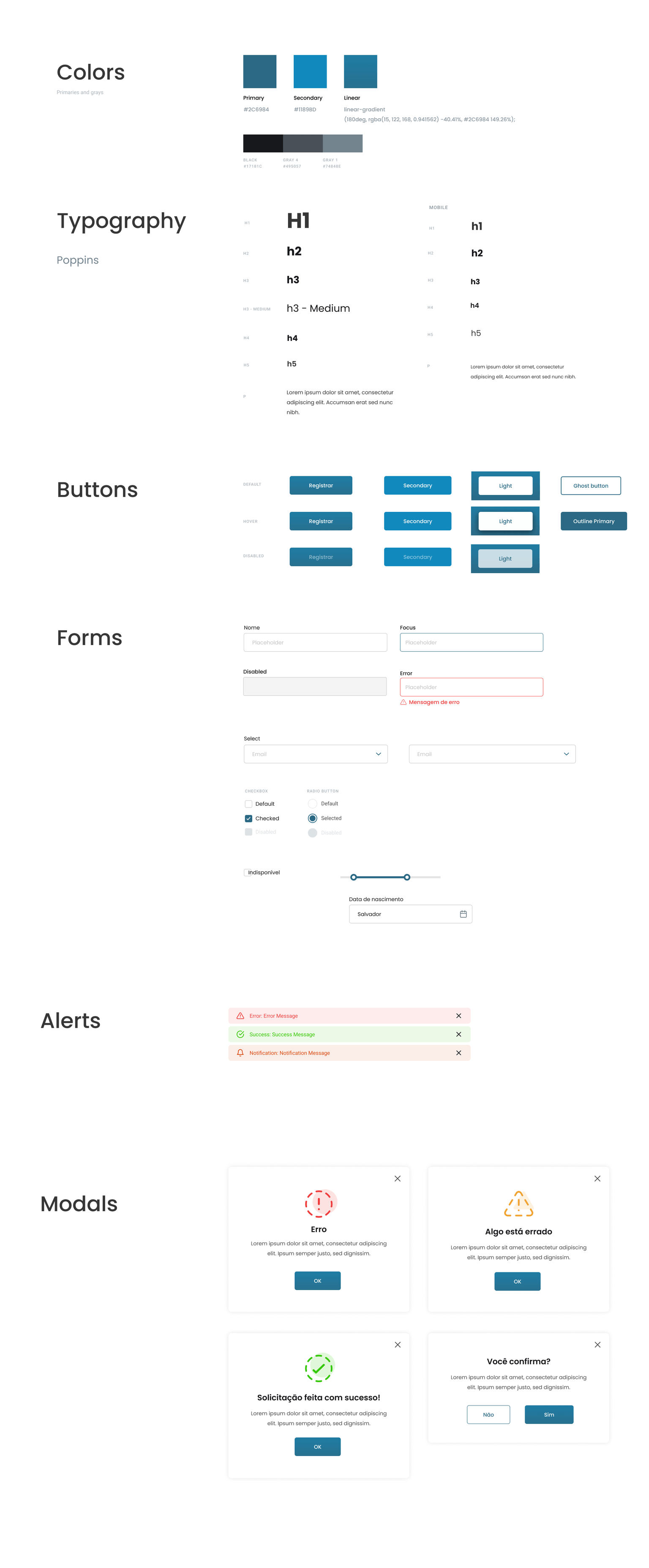
With the flows validated, I moved into high-fidelity prototyping — and built a visual identity that felt true to the business: confident, modern, and built for efficiency.