
Feirajá - UX Case Study
Connecting traditional market vendors to the digital world without losing what makes them special.
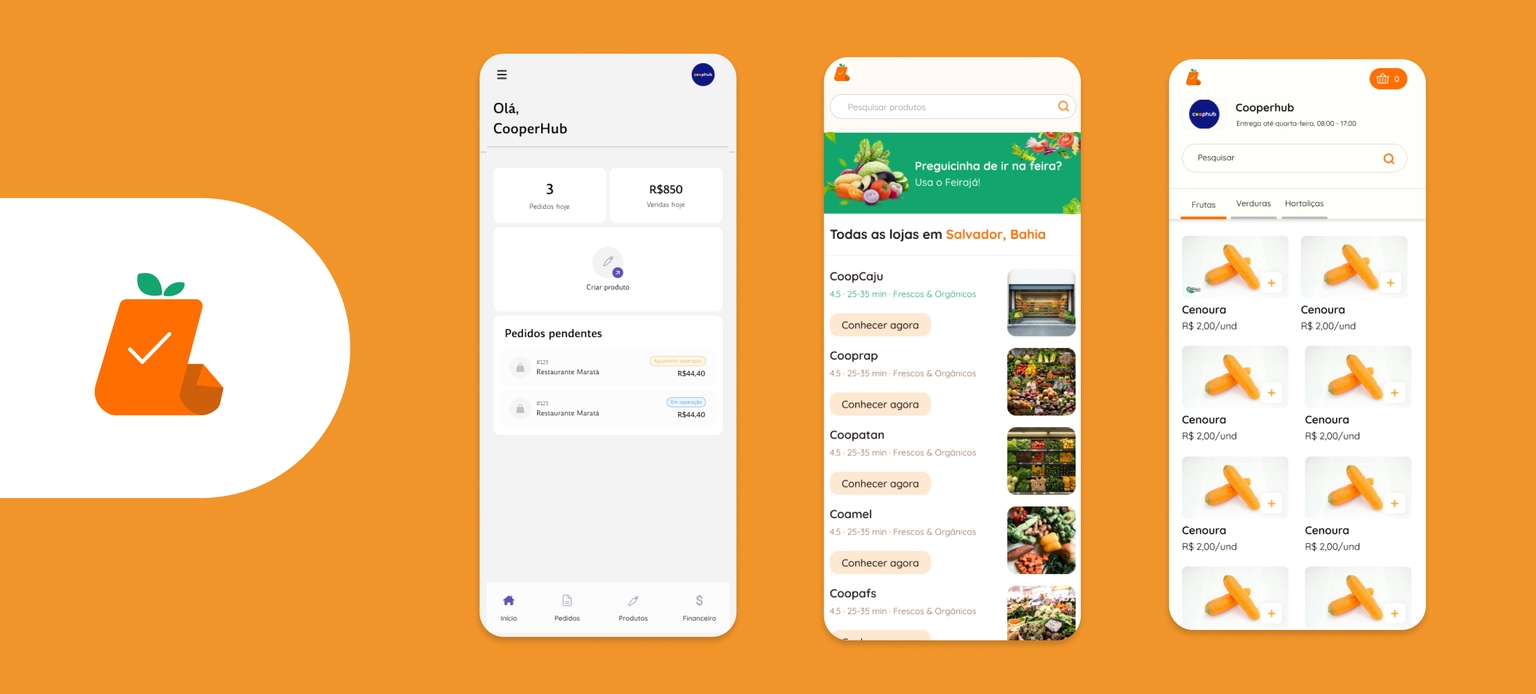
Role
UX/UI Designer
Timeline
2024
Tools
Figma, Maze, Miro
The Problem
How do you digitize the experience of a traditional street market without destroying what makes it special?
I grew up around one of the biggest open-air markets in Amargosa, Bahia. My grandfather was a farmer with his own stall — every weekend was a ritual of fresh produce, familiar faces, and the kind of trust you only build over years. When I moved to a city, I kept asking myself: why can't I have that freshness delivered to my door?
That question became Feirajá.
Street markets are one of Brazil's most deeply rooted food systems — yet they remain almost entirely untouched by digital products at scale. The opportunity wasn't just a business one. It was cultural, social, and deeply human.
Starting with desk research and a CSD Matrix, I quickly realized the challenge ran deeper than building an app. I was designing for a population with low digital literacy, complex logistics, and a worldview built on personal relationships — not transactions.
Who I Talked To
- 3 market vendors
- 1 cooperative manager
- 1 association owner
What I Found
- 63% of farmers can read, but have very low digital literacy
- Vendors resist complex technology — they prefer WhatsApp over any app
- Consumers trust the vendor's expertise in ways that supermarket self-selection can never replicate
- Seasonality is a feature, not a flaw — and any solution that ignores it will fail
"Every day is a challenge because delivery requires a wide variety. If you have little product, customers don't order." — Matheus, Orgânicos do Quintal
Research & Synthesis
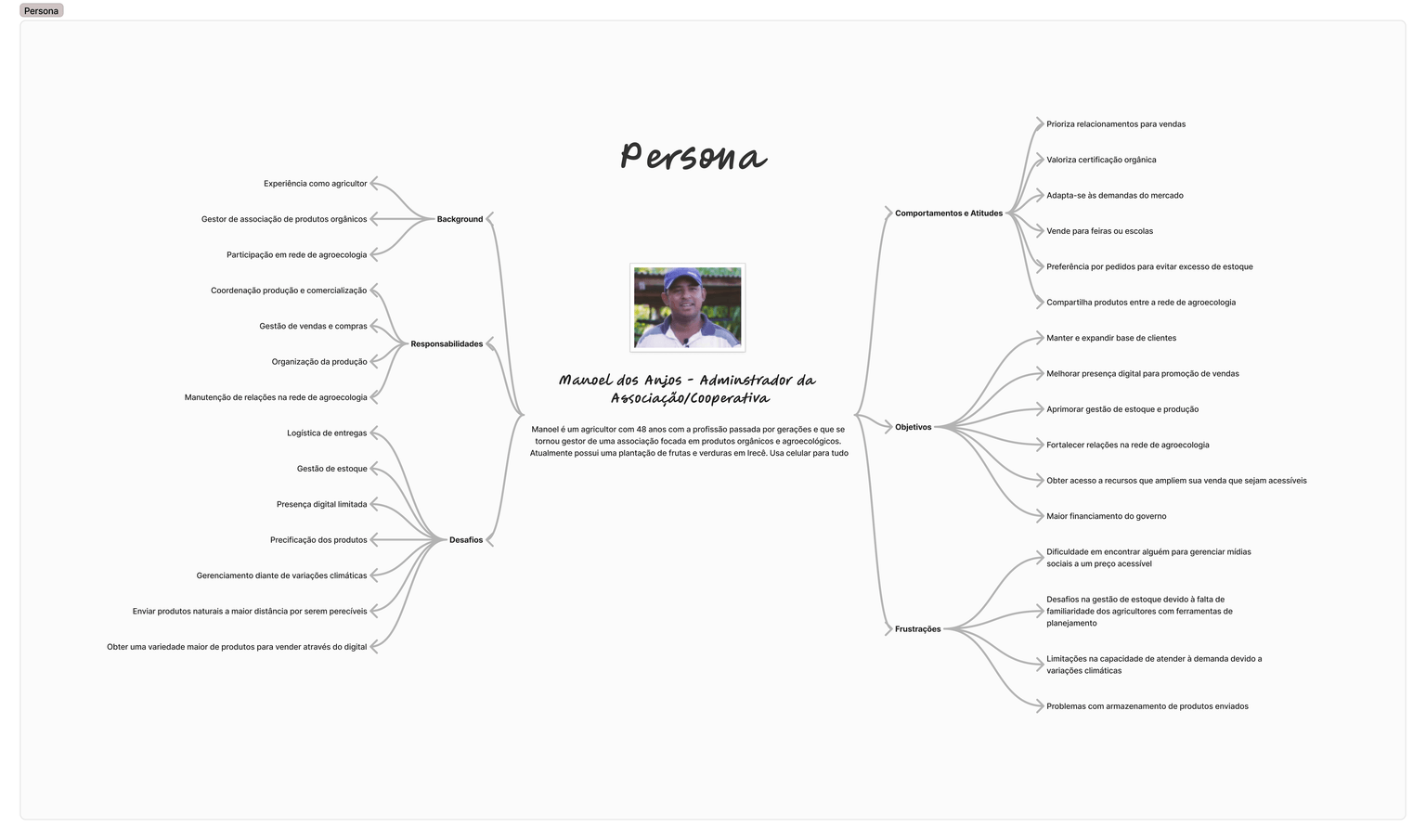
Meet Manoel dos Anjos
Cooperative Manager, 48 years old
Manoel uses his phone for everything — but relies on his son for anything beyond calls and WhatsApp. He prioritizes relationships over transactions, sells by pre-order to avoid waste, and has spent decades building trust through quality, not marketing.
He's not the exception. He's the rule.
Behaviors That Shaped Everything
- Inventory management is visual and tactile — field notebooks, not spreadsheets
- Prices vary by relationship — cooperative members pay less, and that's intentional
- Quality is backed by reputation, not certification labels
- Logistics are communal — shared trucks, buses, and postal services
Building the Experience
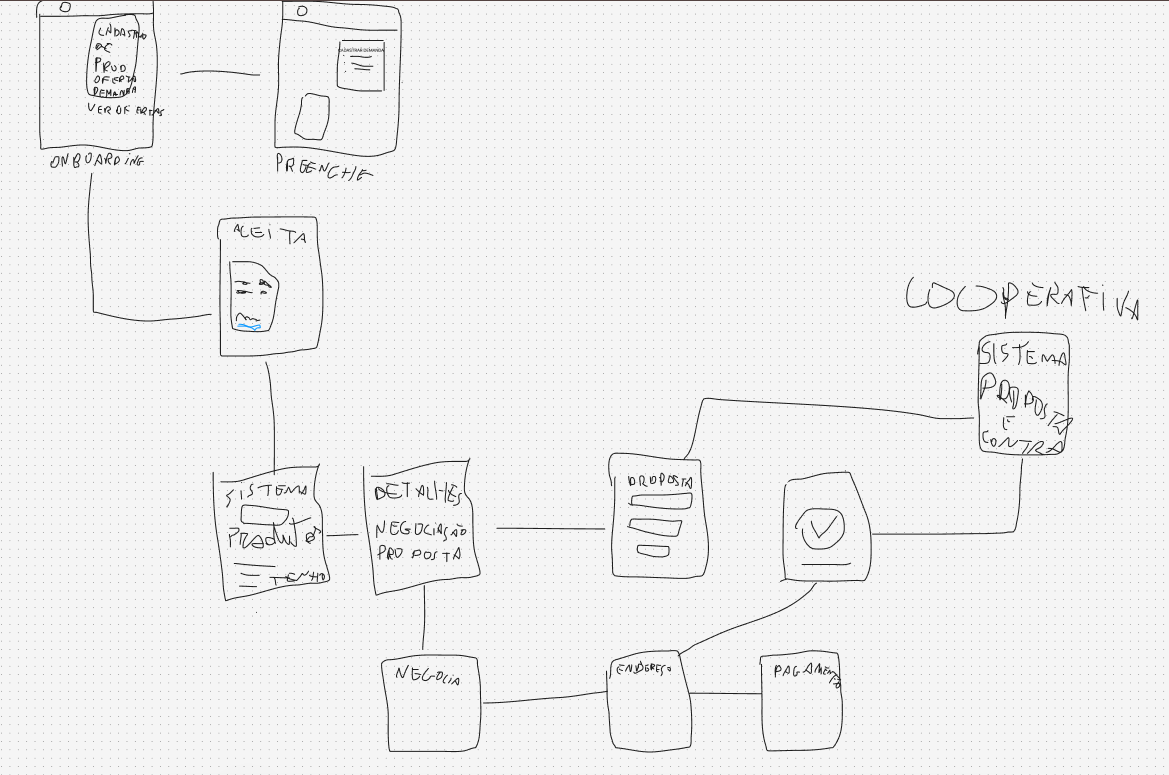
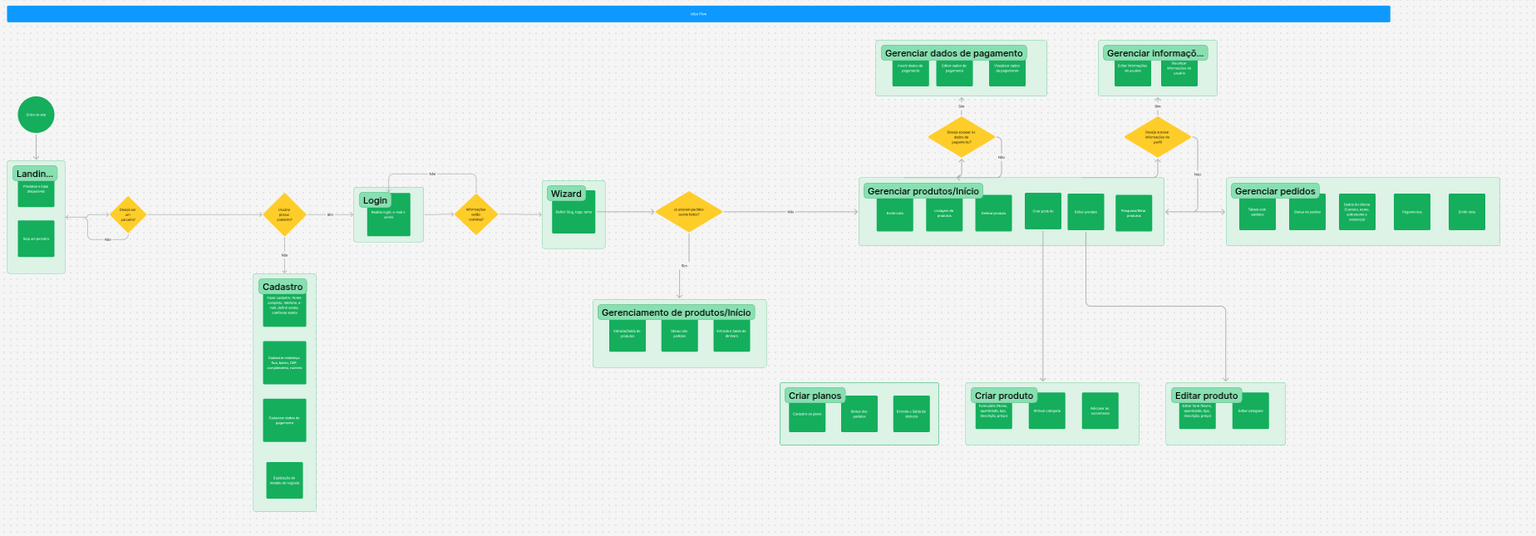
Understanding the user's journey was critical before touching any screen. I mapped out wireflows and user flows for both sides of the marketplace — vendors and customers — to uncover friction points before they became design problems.
Vendor flow
Starting with a wireflow helped align the challenges surfaced in research with real interface decisions. From there, a full user flow outlined every touchpoint in the vendor experience.
Customer flow
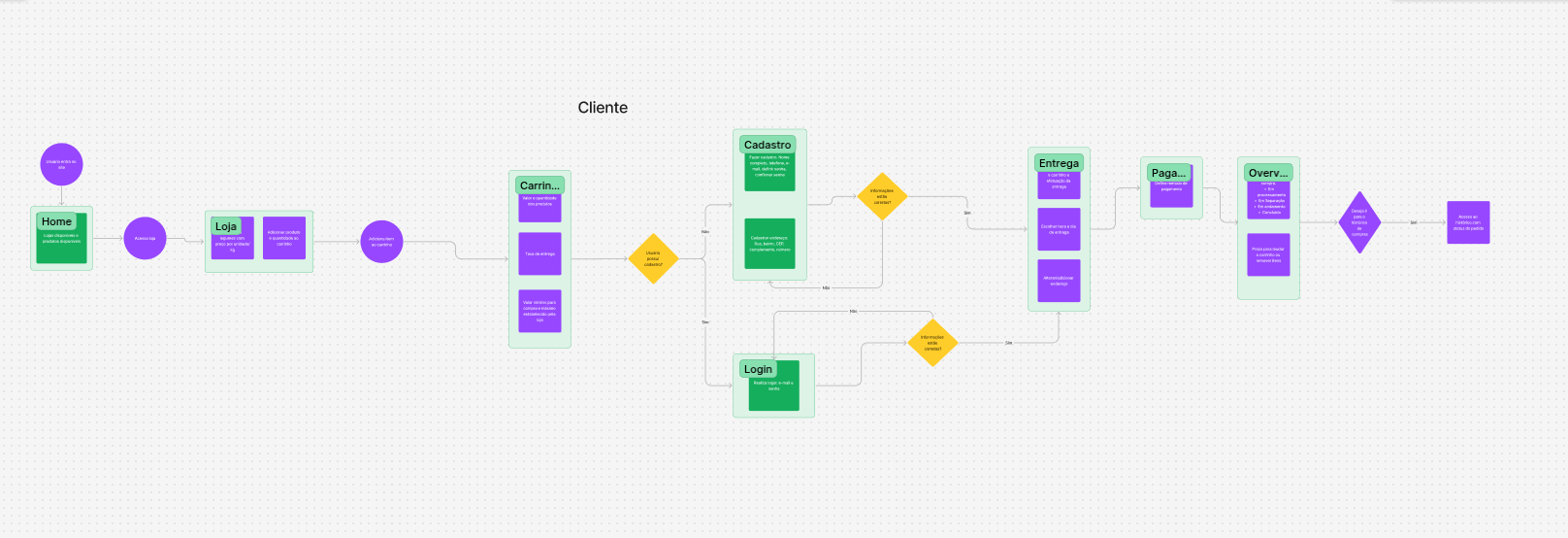
With the user flows defined, I moved into wireframes to understand what each screen needed to carry — and what it could leave out.
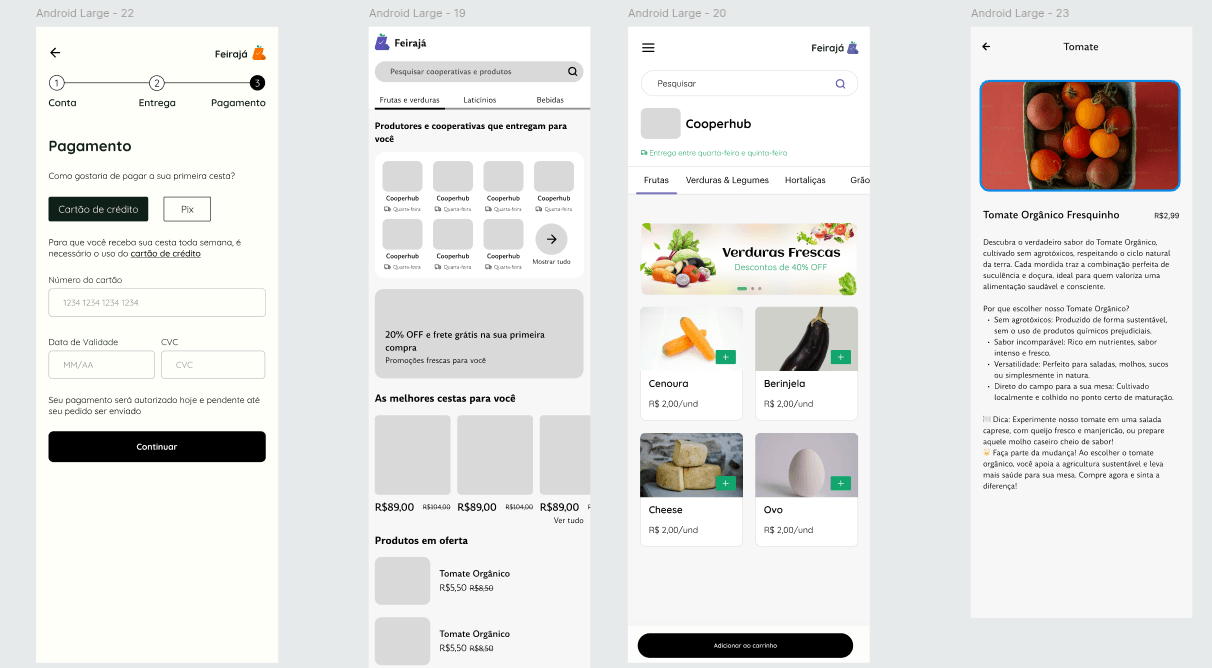
The Solution
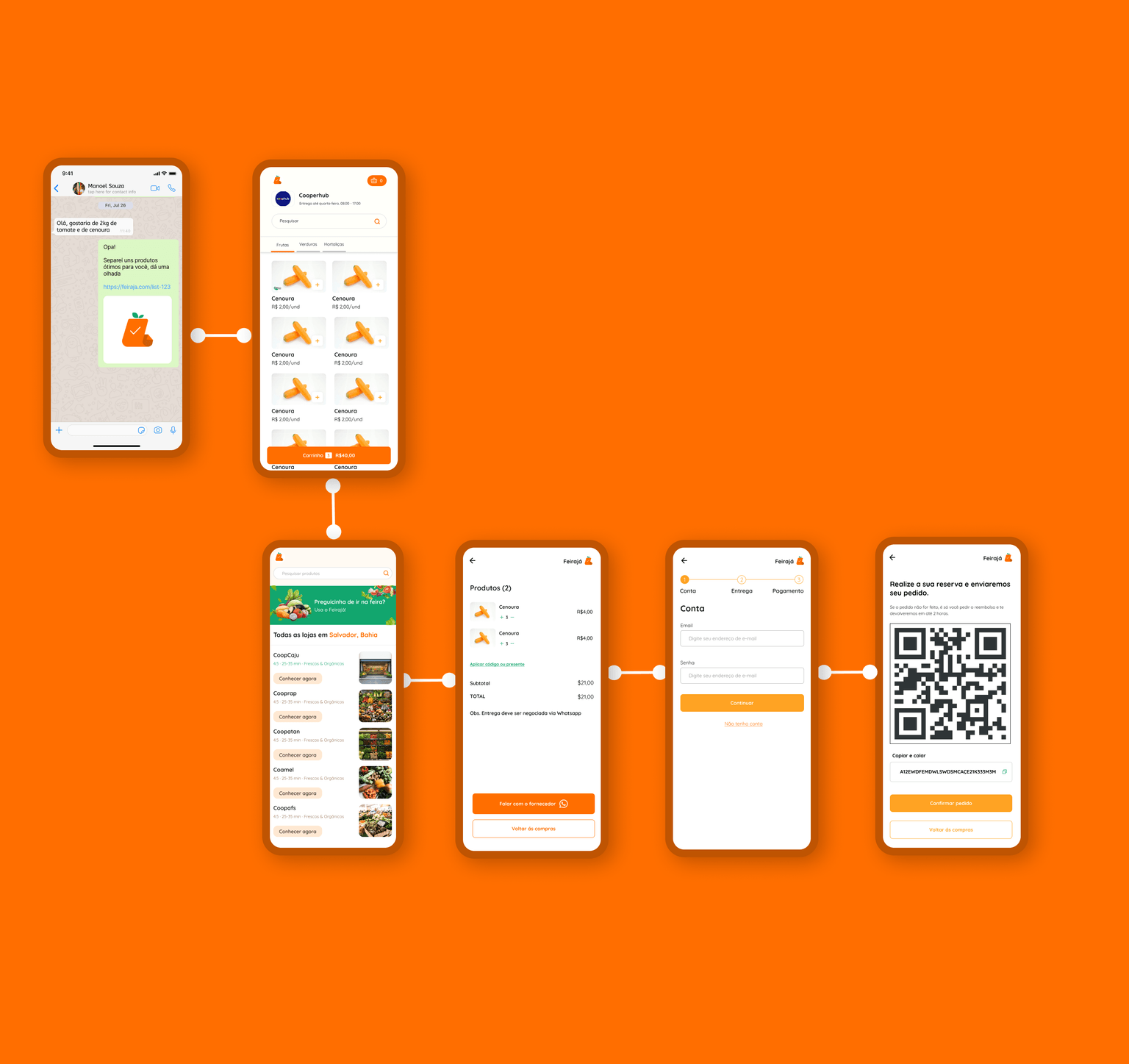
Web Marketplace + WhatsApp Commerce
Web Marketplace (Discovery) ➜ WhatsApp (Purchase) ➜ Delivery
The insight was simple but powerful: don't fight behavior, design with it.
Everyone already uses WhatsApp. Vendors are already selling through it informally. Customers are already comfortable placing orders through messages. The solution wasn't to replace that — it was to give it structure.
- Zero friction — browse on web, buy on WhatsApp
- Familiar — no new apps to download or learn
- Conversational — "I'd like 2kg of bananas" beats any form field
- Accessible — works on any phone, any connection
Experience Architecture
For Customers
1. Browse the web catalog (products, vendors, prices)
2. Send a list via WhatsApp: "2kg bananas, 1kg tomatoes"
3. Bot replies with a link for payment
4. Confirmation sent after payment
5. Scheduled delivery
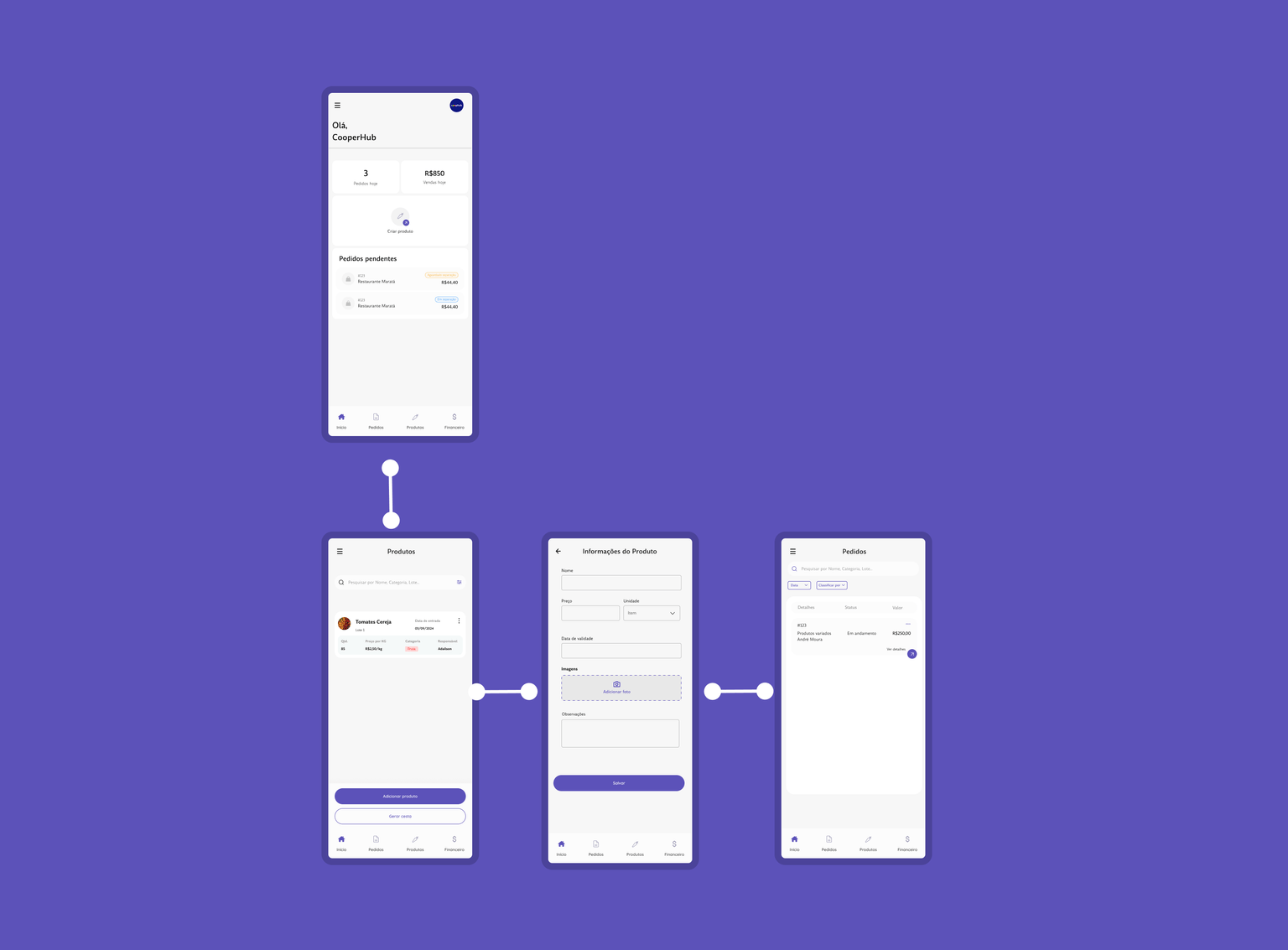
For Vendors Managing the Dashboard
WhatsApp Bot Commands:
/stock banana 50kg 8.90      (product, quantity, price)
/out tomato                  (mark as unavailable)
/price banana 9.50           (update price)
/accept #456                 (approve order)
Usability Testing
The Scenario
Task: "Find and order 2kg of bananas, 1kg of tomatoes, and cilantro through Feirajá."
Participants: 8 users, ages 25–45, familiar with delivery apps
Setup
- Duration: 15 minutes per session
- Method: Moderated remote testing
- Success criteria: Order confirmed by the bot
What We Learned
What Worked
- 87% task completion — users successfully placed orders
- Natural language felt intuitive — "2kg prata bananas" needed no explanation
- Vendor credibility landed — years of experience translated into trust
- WhatsApp required zero onboarding — people just knew what to do
Pain Points
- Vendor selection caused confusion — 3 out of 8 users weren't sure which vendor would fulfill their order
- Site-to-WhatsApp transition — 2 out of 8 hesitated at the handoff moment
- Price transparency — users wanted to see the total before confirming
In Their Own Words
"I love being able to see the options first and then just send a message."
"Wait — which vendor is going to take my order? João or Maria?"
Design Iterations
Before Testing
- Generic "Order via WhatsApp" button
- Vendor selection happened inside the bot
- No price preview
After Testing
- Per-vendor buttons — clear attribution before the order is placed
- Price calculator — estimated total visible on the site
- Onboarding tooltip — guidance for first-time users
Results
- Task completion: 87% → 95%
- Higher confidence in vendor selection
- Fewer drop-offs at the site-to-WhatsApp transition
Design Decisions
1. Radical Simplicity
- One command, one action —
/stocknot/update_product_inventory - Natural language — "out of tomatoes" over alphanumeric codes
- Visual familiarity — a dashboard that feels like a digital field notebook
2. Cultural Preservation
- Vendor profiles surface expertise and personal history, not just product listings
- Seasonal products are celebrated as a feature, not hidden as a limitation
- Fair pricing is maintained — this is not a race to the bottom
UX Lessons
1. Technology ≠ Modernity
WhatsApp can be more "advanced" than a native app — for the right user in the right context. Modernity is defined by how well something fits, not how new it is.
2. Preserve the Core Value
The vendor's expertise is the product. The moment you automate that away, you've built a worse supermarket — not a better market.
3. Progressive Disclosure
Web for discovery + WhatsApp for action = minimum friction at every step.
4. Design Within Culture
Understand the context deeply before disrupting it. The most powerful design decisions here weren't interface choices — they were the ones that chose not to change something.